The "Health Halo" Trap: Why Your Vegan or Gluten-Free Diet Might Be Sabotaging Your Weight Goals
Uncovering the hidden calorie density in "safe" foods.
Published on

We have all been there: standing in the grocery aisle, choosing the bag of chips labeled "Gluten-Free" or the cookies marked "Vegan," convinced we are making a responsible health choice. It feels virtuous. It feels safe.
But months later, you step on the scale and realize the numbers haven't moved in the right direction.
This phenomenon is known by researchers as the "Health Halo" effect. It is the psychological bias where we automatically perceive foods with certain labels (like organic, vegan, or gluten-free) as lower in calories and/or healthier than their conventional counterparts, regardless of their actual nutritional profile.
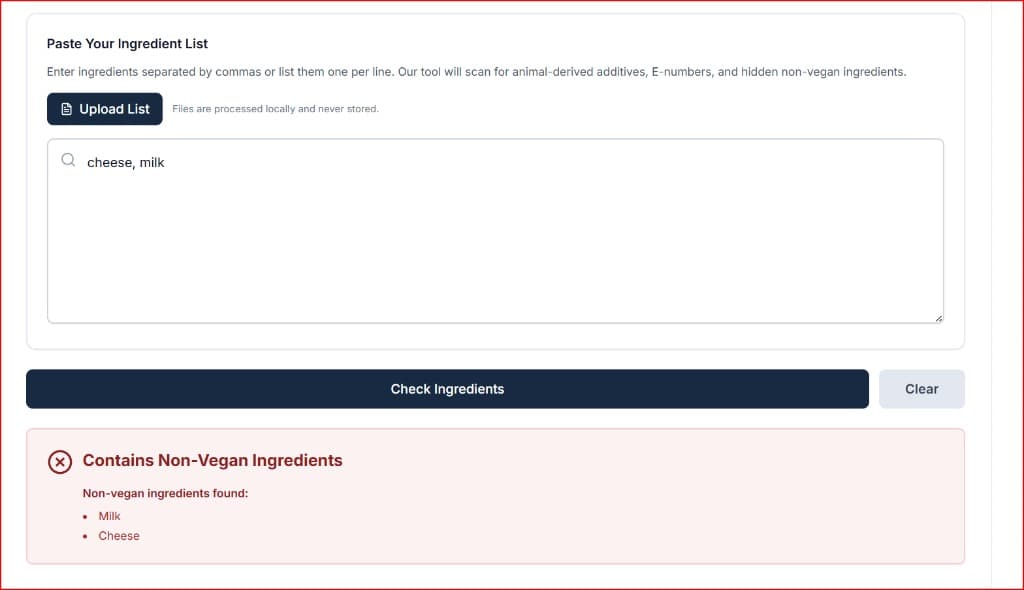
If you are using tools like our Is It Vegan? or Is It Gluten-Free? checkers, you are off to a great start in filtering your food. But to hit your target body composition, you need to look past the label and look at the density of what you are eating.
The Gluten-Free Trade-Off: Texture for Calories
One of the most common misconceptions is that "gluten-free" means "diet-friendly." In reality, gluten is a protein that gives bread and baked goods their structure and elasticity. When manufacturers remove gluten, they have to replace it with something else to prevent the food from crumbling apart.
That "something else" is often extra fat, sugar, or refined starches (like potato or tapioca starch).
According to The Nutrition Source at the Harvard T.H. Chan School of Public Health, gluten-free processed foods are often nutritionally inferior to their standard counterparts. To mimic the texture and flavor of gluten, manufacturers sometimes rely on refined flours—like rice or tapioca starch—that are stripped of fiber and essential nutrients. Worse, these products can be packed with added sugar, sodium, and fat to compensate for taste, creating a "healthy" muffin that can be more calorie-dense than the regular version.
The "Junk Food Vegan" Paradox
Similarly, the plant-based market has exploded with ultra-processed meat alternatives. While environmentally friendly, a burger made from pea protein isolate, coconut oil, and modified starches is still a processed food.
A study published by the National Institutes of Health (NIH) found that diets high in ultra-processed foods lead to significantly higher calorie intake and weight gain compared to unprocessed diets, regardless of the macro-nutrient split.
Just because an ingredient passes as vegan doesn't mean it should be the staple of your diet. It only tells you whether it is, in fact, vegan, but it doesn't tell you how it interacts with your metabolism.
Swipe horizontally or scroll to the right to view the full screenshot.
The 1:10 Protein Heuristic
A common trap in vegan "meat" is a high fat-to-protein ratio. To verify if a substitute is actually a quality protein source, use this simple benchmark: Aim for at least 1 gram of protein for every 10 calories.
Calories Still Count (Even From Plants)
At the end of the day, weight management is largely a game of energy balance. A tablespoon of olive oil is vegan and gluten-free, but it packs roughly 120 calories. If you pour freely, you can easily consume a "healthy" salad that has more calories than a fast-food burger.
To ensure your specialized diet is actually working for your waistline, you need to track more than just ingredients.
Check your baseline
Use our BMI Calculator to get a helpful initial screening of where you stand (keeping in mind that BMI does not account for muscle mass vs. fat).
Set a target
Use the Ideal Weight Calculator to find a realistic goal range based on your timeframe.
How to Navigate the Grocery Aisle
You don't need to abandon your ethical or dietary needs. You just need to refine them.
1. Prioritize Volume over Labels
Focus on "Nutrient Density" rather than just "Calorie Density." Whole plant foods (vegetables, fruits, legumes) take up a lot of space in your stomach for very few calories. Processed vegan/GF foods are often hyper-palatable and dense, making it easy to overeat.
2. The "Empty" Gluten-Free Check
Since many gluten-free flours (rice, corn, tapioca) are low in fiber, they can cause sharper insulin spikes than whole-wheat versions. When buying GF bread or snacks, look for a 5:1 Carb-to-Fiber ratio. If a product has 30g of carbs but less than 2g of fiber, it is essentially a refined sugar delivery system with a "healthy" label.
3. Use the Right Tools for the Right Job
Safety first: If you have Celiac disease or are strictly ethical, absolutely use the Is It Gluten-Free? and Is It Vegan? tools to filter your options.
Health second: Once a food passes that test, turn the package over. Look for short ingredient lists.
Reality check: Periodically check your BMI to ensure your "healthy" diet is actually translating to a healthy body weight.
| Label vibe | Verify sugar / refined carbs | Verify fat type and realistic servings |
|---|---|---|
| “Natural,” “wholesome,” or “clean” | Added sugar can still be high; syrups and concentrates hide in “healthy” packages. | A small printed serving may not match the bowl you actually eat—scale calories accordingly. |
| “Low fat” or “lite” | Fat removed is often traded for sugar or starch to keep palatability. | Check saturated fat and whether “low fat” still means calorie-dense for the portion you use. |
| “Gluten-free” or “vegan” (ethical or medical choices aside) | Ultra-processed substitutes can be calorie bombs with minimal micronutrients. | Plant-based does not automatically mean nutrient-dense—read protein, fiber, and oils. |
Summary: Navigating the Health Halo
The "Health Halo" can be a deceptive trap, leading us to believe that a label equals nutritional superiority. While vegan and gluten-free diets can be incredibly healthy, they require attention to detail—specifically regarding processed substitutes that are calorie-dense but nutrient-poor.
By combining the safety of our dietary checking tools with the objective data of our weight calculators, you can ensure that you aren't just eating "safe" foods, but are fueling your body for long-term health and optimal composition.