Rent vs. Buy in 2026: How to Run the Numbers Yourself
Mortgage rates have settled near 6% while rents are flattening. Here is the simple math to decide what's right for your wallet.
Published on

For the last three years, the "Rent vs. Buy" debate has felt like a lose-lose situation. You either paid skyrocketing rents or locked in a mortgage rate that felt punishingly high.
But as we kick off 2026, the dust seems to be settling. The housing market has seemingly entered a new phase of stability that makes the math much clearer. Mortgage rates have cooled from their recent peaks, settling around 6.06% as of mid-January.
If you are sitting on the fence, you don't need a crystal ball. You just need to run three specific calculations.
1. The Current Reality: Rates at 6.06%
The first number you need is the "cost of money." As of January 15, 2026, the average 30-year fixed mortgage rate is 6.06% according to Freddie Mac.
Current trends suggest this range may persist. Waiting for rates to drop back to 3% is likely a strategy that will leave you renting forever. Instead, use a Mortgage Calculator to see what a 6.06% rate actually looks like for your budget.
The Reality Check: On a $400,000 loan, the difference between a 6% rate and a 7% rate is roughly $260/month. That is significant, but it's no longer the volatile swing we saw in 2024.
📈 Spring 2026 Inventory Update (May 15, 2026)
While traditional 30-year fixed index rates have drifted slightly higher to 6.36% this May (according to Freddie Mac's Primary Mortgage Market Survey), national home price growth has effectively flatlined (meaning average home prices across the country aren't budging). To combat this slowdown, homebuilders are aggressively offering developer-funded interest rate buydowns to clear out sitting inventory.
(Quick breakdown: A rate buydown is when the builder pays a lump sum of cash directly to your lender upfront to lower your interest rate—often saving you hundreds of dollars a month without forcing them to drop the official sticker price of the home.)
Savvy buyers are utilizing these builder concessions to lock in permanent financing paths in the low-5% range, completely bypassing retail index trends and fundamentally altering the short-term rent-vs-buy break-even math.
2. The "Hidden" Cost of Owning
When comparing rent vs. buy, most people only look at the mortgage payment. This is a mistake. In 2026, the average annual cost of home maintenance has risen to $10,867 per year.
When you rent, your landlord pays for the new water heater. When you buy, you do. To get an accurate comparison:
- Take your estimated mortgage payment.
- Add 1% of the home's value annually for maintenance.
- Compare that total against your monthly rent.
If the rental cost is significantly lower, you might be better off renting and investing the difference. You can use an ROI Calculator to see how that "saved" money could grow in the stock market over 10 years versus locking it into home equity.
3. The Equity Advantage
The strongest argument for buying isn't monthly savings—it's forced savings.
Even with rates at 6%, a portion of every mortgage payment goes toward paying down your principal. This is money you are paying to yourself, stored in the value of your home. Renters pay 100% interest (in the form of rent) with 0% equity return.
Projection: With median home prices forecast to grow modestly at 1% this year according to Redfin, your home acts as a hedge against inflation.
Action: Check your potential tax benefits. Mortgage interest is deductible if you itemize, though many buyers may find the new higher Standard Deduction more beneficial. A Paycheck Calculator can help you estimate if owning a home changes your take-home pay via tax adjustments.
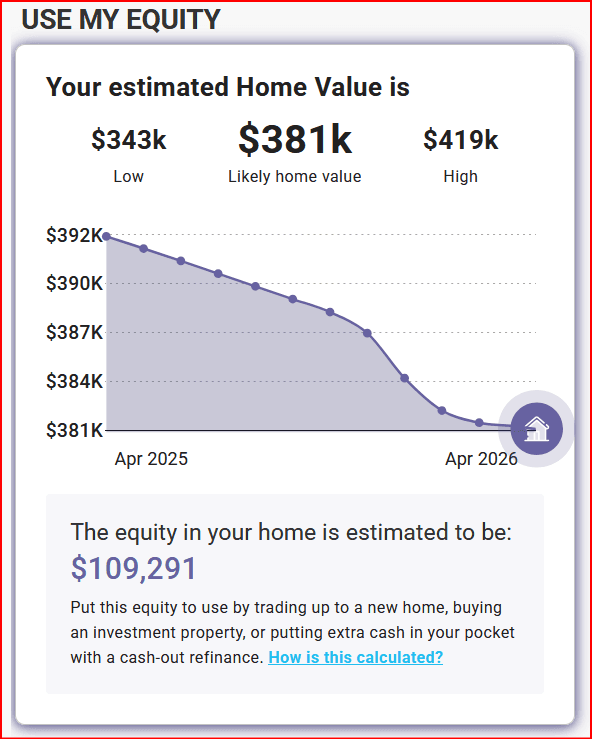
- Principal Paydown (~$24,400): Even at 6% interest, a portion of your monthly payment reduces your loan balance. This is money you get back later.
- Home Appreciation (~$41,600): Calculated using a conservative 2% annual growth rate on a $400k home over 5 years.
- Total Wealth: $24,400 + $41,600 = ~$66,000 (Rounded conservatively to $65k).
- Note: The calculation does not include potential agent fees/closing costs upon sale, which typically reduce net proceeds.
Swipe horizontally or scroll to the right to view the full screenshot.
The Verdict for 2026
There is no single "right" answer, but there is a right way to calculate it.
- Buy If: You plan to stay for 5 to 7 years. It takes time for home value growth to offset the high upfront costs of buying (such as closing costs and inspection fees). If you move sooner, you often walk away with less cash than you would have if you had rented. There are no guarantees, of course, but typically, keeping the home for 5-7 years is when one starts to see positive equity gains.
- Rent If: Your monthly rent is significantly lower than a comparable mortgage. Save the difference, invest what you can, and keep your flexibility.
| Input | Why renters care | Why buyers care |
|---|---|---|
| Mortgage rates & monthly payment | Insulated in the short term. Even if mortgage rates shoot up, your landlord can't touch your payment until your lease is up for renewal. | High impact. Every fraction of a percentage rate increase instantly changes how much home you can afford and forces more of your monthly payment to go to interest instead of owning the property. |
| Time horizon | Perfect for short stays. If you need to move in a year or two, you can just hand back the keys without losing thousands of dollars to real estate transaction fees. | Requires a long-term commitment. The heavy upfront costs of buying (like bank fees and inspections) take roughly 5 to 7 years of home appreciation to cancel out. Moving too soon almost always loses you money. |
| Mobility & life risk | Ultimate flexibility. It is incredibly easy to pack up and relocate for a new job or a change in family size without waiting on a home listing timeline. | High risk if life changes fast. If you are forced to sell during a sudden housing downturn, you could take a heavy financial loss. Plus, any unexpected breakdowns—like a leaky roof or a dead AC unit—come straight out of your pocket. |
The 2026 Cheat Sheet
- Current Mortgage Rate: 6.36% (30-Year Fixed) — rate verified May 15, 2026.
- The 5-7 Year Rule: Buying generally only beats renting if you stay for 5 to 7 years. It takes time for home appreciation to recover the heavy upfront costs of buying (like closing costs and inspections).
- Don't Forget: Add 1% of the home price annually for maintenance when running your numbers.
- Next Step: Use a Mortgage Calculator to find your specific monthly breakeven point.
- May 2026 Update: Standard home price growth has stalled nationally, shifting the mathematical advantage to buyers who can secure upfront developer rate concessions rather than traditional retail financing structures.