Fair Rental Value: When Your Rental Can’t Be Lived In, Does Insurance Cover the Lost Rent?
Some policies set aside a dollar limit for rent you can’t collect after a covered loss. Here’s what that line means, whether it’s always included, and how to turn the limit into rough months of rent.
Published on

A storm, fire, or other covered claim can leave a rental unit empty for months. The building may be too damaged for a tenant to live there. Rent that used to show up each month can stop overnight.
Some insurance declarations list a limit called Fair Rental Value (sometimes shown next to wording about extra living costs). That line is easy to skim past. This guide explains what it is, when it shows up, why it matters if you collect rent, and how to turn the dollar limit into a rough "months of rent" number.
Disclaimer: This is general education, not insurance, legal, tax, or lending advice. Coverage names, limits, waiting periods, and claim rules vary by carrier and policy form. Your declarations page and policy wording control your situation. Ask your agent or carrier about your own paperwork before you rely on any number here.
What Fair Rental Value Is
Fair Rental Value is a dollar limit that can help replace rent you cannot collect while the place cannot be lived in after a covered loss.
It is not the money that rebuilds the walls and roof. That is usually the dwelling (building) coverage. It is not money for couches, TVs, or a tenant's stuff. That is personal property coverage—and on some dwelling or landlord-style policies that personal-property line may show as N/A.
Analogy — the closed ice-cream shop: Imagine you own a small ice-cream shop. A pipe burst ruins the floor. While the shop is closed for repairs, customers cannot buy cones. The building insurance helps fix the floor. Fair Rental Value is more like a limited stack of "missed daily sales" vouchers for the weeks the shop stays shut—not a second carpenter, and not free ice cream forever.
Why This Line Matters If You Collect Rent
When a tenant pays rent, that cash often helps cover the loan, taxes, insurance, and repairs. If the unit cannot be lived in, that cash can pause while those bills keep coming.
Fair Rental Value is meant to soften that income gap—up to the limit on the page, and only when the claim qualifies under your policy.
Analogy — the bus that stops running: Think of monthly rent like a city bus that drops cash at your stop on the 1st. After a covered loss, the route is shut down. Fair Rental Value is a limited stack of temporary shuttle tickets—not a new bus factory, and not unlimited rides until the city finishes every repair.
If rental income is part of how you cover your own living costs, an empty unit can feel like a paycheck that did not arrive. For wage income on the other side of a household budget, our Paycheck Calculator shows what you keep from a job after taxes and deductions—handy when you are looking at wage take-home next to rental deposits in the same month.
Is Fair Rental Value Optional?
Short answer: it depends on the policy type and the carrier. There is no single nationwide switch labeled "add Fair Rental Value."
Owner-occupied homes
A typical homeowner policy for a place you live in often focuses on extra living costs if you cannot stay in the home (hotel, temporary rent, and similar). That is a different problem than "my tenant cannot pay me rent."
Rentals and dwelling-style policies
Landlord or dwelling-style policies are more likely to show Fair Rental Value or similar "lost rent" wording. On some declarations, Fair Rental Value and additional living expense sit on one combined line with one shared dollar limit. Labels differ. The occupancy switch that often puts a house you no longer live in onto a dwelling form is a different question—see DP-3 vs. HO-3 when the house becomes a rental.
What to do: Open your declarations page. Search for "Fair Rental Value," "loss of rents," or similar. Ask your agent: Is this included? Can the limit be raised? What triggers a payment? Do not assume every homeowners policy includes a rent-replacement limit.
Keeping a mortgage-required policy in force is a separate topic from understanding FRV. If you are weighing canceling coverage while you still owe on the loan, read what happens if you cancel homeowners insurance with a mortgage—that path is about force-placed coverage and loan risk, not lost rent math.
Where to Find It on Your Paperwork
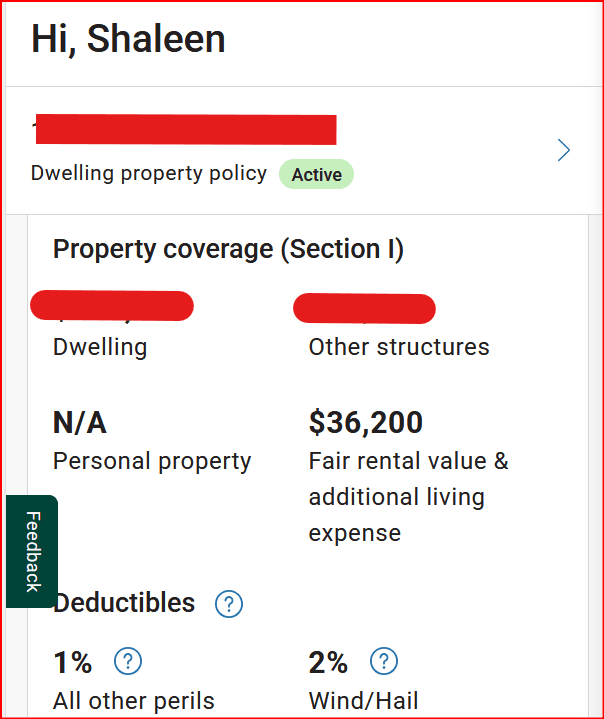
Look on the declarations or coverage summary—the short page that lists limits in dollars. Find the line for Fair Rental Value (or the combined living/rent line). Write down the limit. In a real carrier portal, that line often sits under Property coverage (Section I)—like the screenshot below.
Real Policy Portal: Fair Rental Value on Property Coverage
Swipe horizontally or scroll to the right to view the full screenshot.
Insurance premiums are sometimes paid through escrow with the mortgage. That only means the bill for the policy may ride inside your monthly loan payment. It does not change what Fair Rental Value covers. For how escrow shortages can raise a payment when taxes or premiums jump, see escrow shortage explained.
For a sense of the full monthly housing stack (loan plus extras), you can also run numbers in the Mortgage Calculator—useful context when rent income is what normally helps carry that stack.
Turn the Limit Into Rough Months of Rent
Here is the info-gain step. Treat the Fair Rental Value number as a ceiling on a stack of rent checks, then ask how tall that stack is in months:
Rough months of rent ≈ Fair Rental Value limit ÷ monthly rent
Analogy — the roll of concert tickets: The limit is like a roll of tickets to a show that pays you one "month of rent" per ticket. Divide the dollar limit by one month's rent to see about how many tickets are on the roll. When the roll ends, that coverage line is used up—even if the repairs are still going.
| Monthly rent | Rough months (limit ÷ rent) |
|---|---|
| $1,500 | ≈ 24 months |
| $1,800 | ≈ 20 months |
| $2,200 | ≈ 16 months |
| $3,000 | ≈ 12 months |
That $36,200 figure comes from one policy for one house—the same screen above. Your limit will almost certainly differ. The table only shows what that ceiling works out to at a few example rents. Real claims can also pay less than the ceiling—carriers may use their own view of fair rent, timing rules, and how long the unit counts as unrentable. Still, the division gives a clear starting picture: about how many months does my limit buy at my rent?
When Repairs Outlast the Month Stack
After a big weather event, contractors get busy. Permits take time. Materials run late. A unit can sit empty longer than a simple "months of rent" stack suggests.
If empty time runs past what your Fair Rental Value limit can support, rental income can stop again even though the claim is still open on the building side.
Analogy — the fuel gauge vs. the road trip: Fair Rental Value is the fuel in the tank. The rebuild is the road trip. A full tank does not guarantee you reach the destination if the trip is longer than the tank. Knowing the tank size (months) helps you plan, talk with your agent about higher limits if available, and avoid assuming rent coverage lasts until every nail is hammered.
What Fair Rental Value Does Not Do
- It does not rebuild the house by itself. Dwelling coverage is the building side.
- It does not replace a tenant's personal belongings.
- It does not pay for losses the policy does not cover.
- It does not mean unlimited rent checks until the home is perfect again. It is a dollar limit—and that limit can run out.
Quick Checklist
- Find Fair Rental Value (or similar lost-rent wording) on your declarations page.
- Write down the dollar limit.
- Write down the monthly rent for the unit.
- Divide limit ÷ rent for a rough months-of-rent picture.
- Ask your agent what raises the limit, what triggers payment, and how timing rules work.
- Keep the declarations with your rental records so you are not hunting for the number after a loss.
Summary
- Fair Rental Value is a dollar limit that can help replace rent you cannot collect while a rental sits unlivable after a covered loss.
- It is not building coverage and not contents coverage.
- Whether it is included or adjustable depends on the policy and carrier—check your declarations and ask your agent.
- Rough months of rent ≈ Fair Rental Value limit ÷ monthly rent. That is a ceiling check, not a claim promise.
- Long rebuilds can outlast that month stack. Know the number before you need it.